
Best Website Builders for Small Businesses in 2025: WordPress vs. Webflow vs. Shopify vs. Wix vs. Framer

July 9, 2025

.svg)
Every few years, digital marketing goes through the same cycle.
A new platform shows up and everyone rushes to “figure it out” before anyone else. Someone writes a post declaring SEO dead, usually very confidently. Brands jump onto the next shiny tactic, over-invest in it, and quietly move on when it stops working. Then a year or two later, the basics suddenly matter again.
Just look at Google’s E-E-A-T (Experience, Expertise, Authoritativeness, and Trustworthiness) framework. It was initially launched in 2014 and updated just once since in 2022. It’s more than a decade old but is still one of the most important aspects in SEO today.
I’ve seen this happen enough times that most “trend” conversations don’t really move me anymore.
But heading into 2026, something genuinely feels different.
Not because there’s one new channel everyone needs to master or one growth hack that will suddenly change everything. The shift is much deeper than that. What’s changing is the role marketing plays inside a business.
Marketing is no longer a function that sits at the end of the line, taking a finished product and figuring out how to promote it. It’s starting to blend into product, customer experience, community, and even operations. The lines between these teams are getting blurry, especially in startups and small businesses where roles already overlap.
The trends that matter in 2026 aren’t about doing more marketing. They’re about doing marketing differently, with a much closer connection to how real people discover, evaluate, and commit to a product or service.
These are the digital marketing trends shaping 2026, especially for startups and small businesses that don’t have deep pockets but know speed and flexibility are their advantages.
So let’s have a look at the trends:
For a long time, marketing was considered to be separate from product.
The product teams built something and the marketers’ job was to take it to market. Create custom landing pages, run ad campaigns, post on social media, analyse results and create decks.
But this is changing rapidly.
In 2026, the best marketers won’t just be launching campaigns anymore. They will be shaping what gets built in the first place.
A big reason for this shift is the advent of AI. With vibe-coding tools like Lovable, Cursor and Replit, marketers can actually turn their ideas into working prototypes.
Are these production-ready?
Not at all.
But at least it allows the marketers to go from “We think the users might want this” to “Here’s a prototype. Here’s how people interacted with it. Here’s what broke. Here’s what worked.”
The point is speed and clarity. And this fundamentally changes the conversation with founders and developers.
In 2026, marketers won’t just be storytellers. They’ll help define the problem, prototype potential solutions, gather feedback from real users, and then market products that already have validation behind them.
This shift is especially important for startups and small businesses, where speed matters more than perfection and roles naturally overlap.
A solid real-world example of marketers becoming product builders comes from Yannis, a digital marketer from Greece who used Lovable to launch a micro-SaaS called PrintPigeon.
He was frustrated by how hard it was to send official letters to the tax office when you don’t have a printer and no accessible postal office, so instead of just talking about the problem, he built a solution.
In just three days, using Lovable’s AI-driven platform, Yannis created a service where users could upload documents, enter recipient details, and have letters printed and mailed. The whole prototype cost him only about $38 in Lovable credits.
He validated the demand using £100 in google ads, tested it with real users and iterated the prototype quickly based on feedback.
This is a great example of how marketers today aren’t just shaping stories, they’re shaping products.
I’ll admit it. In 2024 and early 2025, even I felt a bit uneasy about SEO.
AI search, ChatGPT, Perplexity, Google’s AI answers. It felt like traditional blogging was about to get wiped out.
According to a report by Similarweb, since the launch of Google AI overviews, Zero-click searches (occurs when a SERP displays the answer to a user's query at the top of the page and the user doesn’t have to click through to the website) have increased from 56% to 69%.
Website traffic is significantly lower than it used to be. But that doesn’t mean that SEO is dead. However, there is a need to change the strategy and the KPIs.
Instead of focusing on tracking clicks and traffic, start measuring Impressions, AI citations and assisted conversions.
ChatGPT and similar tools still rely heavily on existing content. In fact, a large percentage of AI-generated answers still cite blog posts as their primary sources. The difference is they don’t care whether you’re a big company or not.
They prioritise depth, specificity and experience.
So instead of writing broad and generic content like:
“What is SEO?”
Focus on more bottom-of-funnel, niche content. Winning content in 2026 will look more like:
“Best SEO tools for agencies under 10 people”
“Best SEO agencies for automotive businesses”
Long-tail, comparison-based keywords already convert better than generic informational keywords. SEO in 2026 isn’t about chasing volume. It’s about helping someone make a decision. And that’s exactly what AI surfaces.
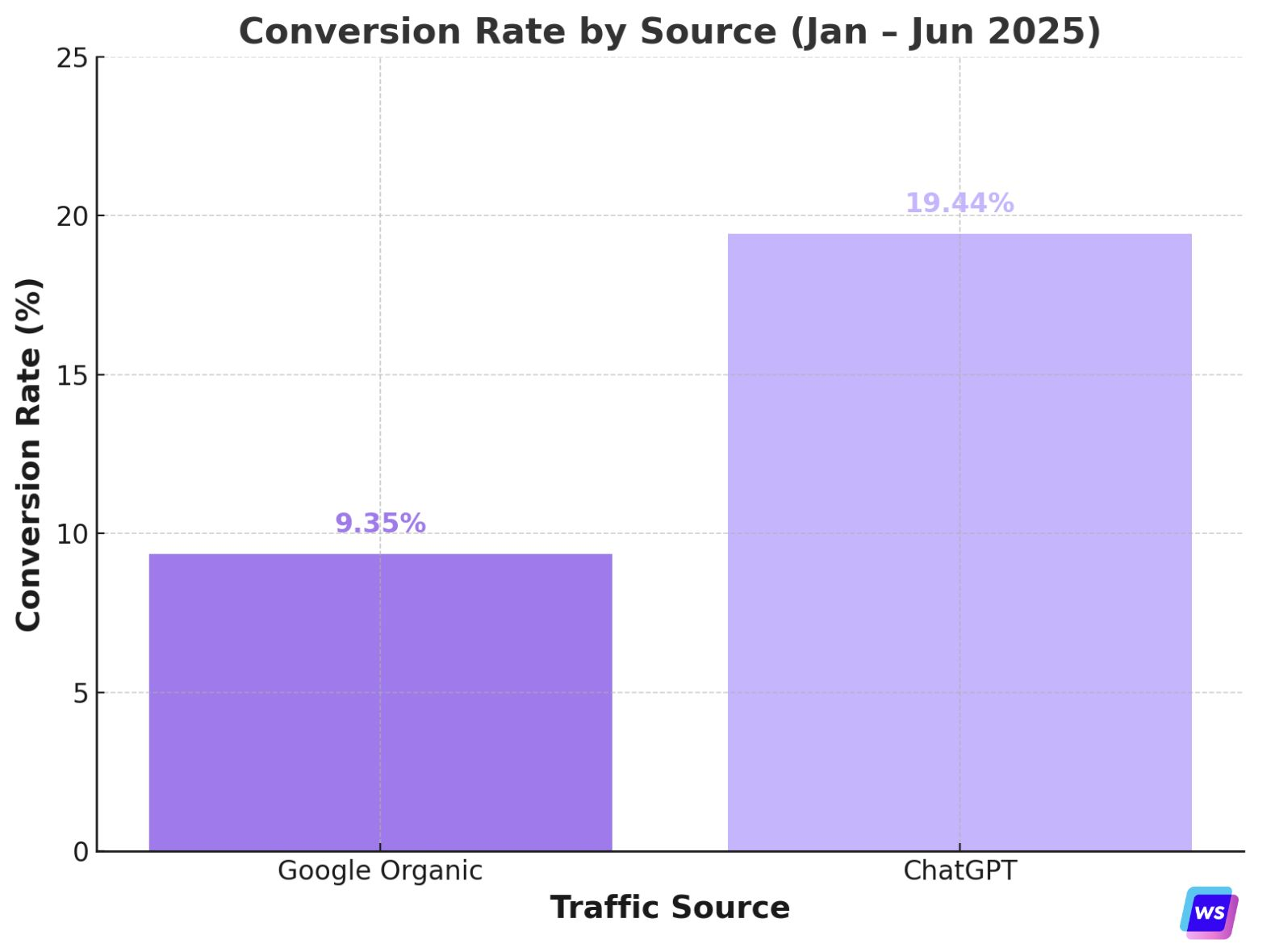
According to a report by Writesonic, ChatGPT converts 2.08x more than Google. While Google Organic drove 36.37x more sessions, ChatGPT converted 2.08x better. That means users coming from ChatGPT were significantly more intent-driven.
Why is this the case?
ChatGPT’s conversational format makes users feel they’re getting custom-tailored advice, dramatically increasing their likelihood of acting upon that information. The format also compresses their buyer journey as instead of switching tabs, the entire journey from awareness to consideration can happen in one single location.
So by the time the user visits a website from ChatGPT/Google’s AI overviews, they have most likely already made the decision to buy or are very highly interested.
Chances are that if your content doesn’t help someone decide, AI won’t surface it.
The classic funnel looks great on slides.
Top of funnel.Middle of funnel.Bottom of funnel.
But in reality, funnels aren’t linear. They’re adaptive systems that respond to intent signals in real time.
Instead of forcing users down a predefined path, modern funnels adjust based on:
Adaptive funnels don’t need a large engineering team to work. Many startups and small businesses are already building simple versions of them using tools like GetResponse (especially on the MAX plan).
Take a typical e-commerce scenario. A customer browses high-end trail running shoes, adds a pair to their cart, but hesitates and drops off before checkout.
Instead of sending a generic abandoned cart email, GetResponse can detect this hesitation through its ecommerce tracking and trigger a more relevant response. For example, the user can receive a WhatsApp message or email featuring a short video testimonial from a trail runner, along with a reminder of the exact product they viewed.
When that same user returns to the site, the experience can adapt again. While GetResponse isn’t a full website personalisation engine, it can show intent-based pop-ups or banners highlighting trail running offers, free shipping, or location-specific discounts. AI-powered product recommendations can also adjust based on what the user previously browsed.
The result isn’t a perfectly personalised journey, but it’s far more relevant than a static funnel.
And that’s the point.
In 2026, adaptive funnels won’t be about building complex, custom systems from scratch. They’ll be about using smart automation tools to respond to real user behaviour in real time, even with small teams and limited budgets.
This is one of the most underutilised trends I see.
In 2026, more brands are realising that their biggest distribution advantage isn’t ads or SEO. It’s their own team.
Employees posting about:
Employee-generated content (EGC) gets up to 561% more reach compared to the same message posted by the official company account.
Companies that have adopted EGC have reported increase in online engagement and around a 19% boost in sales.
The strongest brands I see today don’t dominate the conversation themselves. Their people do.
One of my favourite examples of this is a tool I personally use a lot: Sitechecker.
I actively follow one of their employees on LinkedIn, Ivan Palii. He regularly shares in-depth SEO insights, experiments, and breakdowns, and almost none of his content feels promotional.
Instead of selling the product, he shows how Sitechecker can be used in real scenarios to solve actual SEO problems. Through his posts, you naturally start to understand the product’s depth and use cases without ever feeling like you’re being marketed to.
He even runs his own blog, Hack the Algo, where he writes about SEO experiments, updates, and trends more broadly. The brand is present, but never forced.
That association alone played a role in my purchase decision. Not because I saw an ad, but because I consistently saw real expertise from someone inside the company.
That’s the power of employee-led influence. The strongest brands don’t dominate the conversation themselves. Their people do.
AI has made content production absurdly easy.
And that’s exactly the problem.
The internet is drowning in low-effort, generic, lifeless content. The term “slop” went mainstream in 2025, with online mentions increasing by over 9 times compared to 2024, mostly as a way to call out lazy AI output.
People can feel it instantly.
What’s cutting through instead is content that feels intentional and human. Brands with clear opinions, distinct voices, founder-led storytelling & imperfect but real visuals are going to succeed in 2026.
AI isn’t the enemy here. Soulless usage of it is.
A great example of a brand with soul thriving in the AI slop era is Ryanair.
Ryanair has never tried to sound polished, aspirational, or overly brand-safe. Instead, especially on platforms like TikTok and Instagram, they’ve leaned fully into self-awareness, sarcasm, and internet humour. They openly joke about legroom, baggage fees, delayed flights, and customer complaints, things most brands would avoid at all costs.
What makes this work is consistency. Their content feels unmistakably human. It’s reactive, culturally aware, and often imperfect.
In a feed full of generic, AI-written posts that all sound the same, Ryanair’s content stands out precisely because it doesn’t try to be perfect or correct. It tries to be real.
Ryanair has built one of the most engaged airline social presences in the world, especially among younger audiences, without relying on inspirational messaging or heavy ad spend. People follow Ryanair not because they love flying with them, but because the brand feels like it actually understands internet culture.
That’s the lesson for 2026.
When AI makes it easy to generate endless content, the brands that win won’t be the safest or the most polished. They’ll be the ones that sound human, even if that means being a little imperfect.
Paid ads are getting more expensive every year. At the same time, product features are being copied faster than ever. What used to be a differentiator can now be replicated in weeks, sometimes days.
So the real question for 2026 is simple.
What actually creates a moat?
More often than not, the answer is community.
The products that win long term aren’t just easy to use. They’re easy to share. Sharing is baked directly into the experience, not bolted on as an afterthought.
Instead of relying purely on paid acquisition, these products naturally encourage users to create and distribute value on their behalf. Think about:
Each of these isn’t just content. It’s proof of value.
This creates a powerful loop:
More users lead to more shared resources → More shared resources attract more users → More users improve the product and the ecosystem around it
In 2026, marketing won’t stop at acquisition. It will extend into how your product gets talked about, shared, and reused by the people already using it.
If your product doesn’t give customers something worth sharing, whether that’s a workflow, a template, or a result they’re proud of, you’re going to be forced to rely on paid ads forever. And that’s a hard place to be as costs keep rising.
A great example of this is how tools like Notion and n8n have grown.
Notion didn’t just ship a note-taking app. It created an ecosystem where users build and share templates for everything from startup dashboards to personal finance trackers. Many people discover Notion not through ads, but through a template someone shared with them.
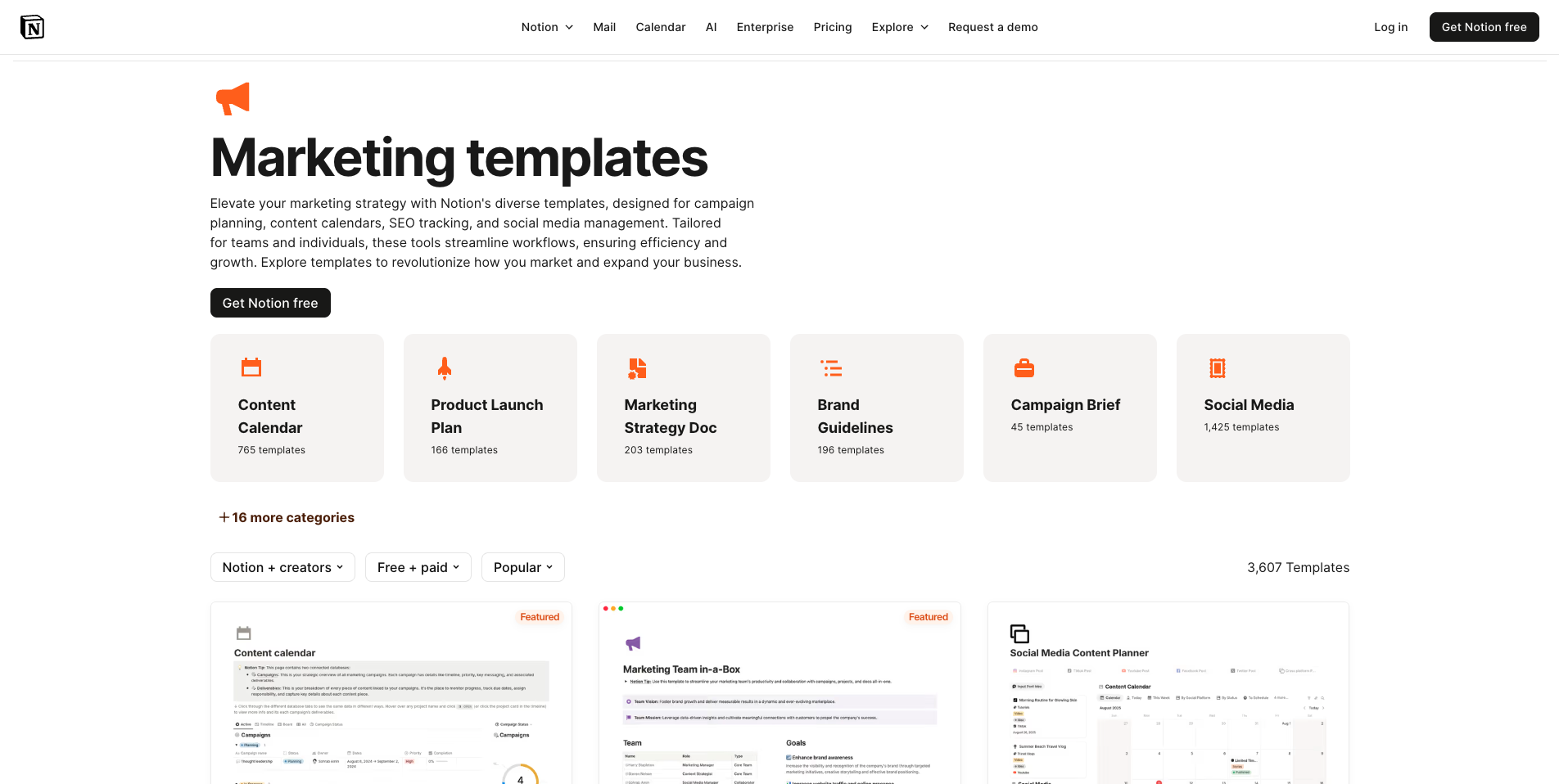
Similarly, n8n’s community builds and distributes workflows that solve real problems. The more people use the product, the more workflows exist. And the more workflows exist, the more valuable the product becomes for everyone else.
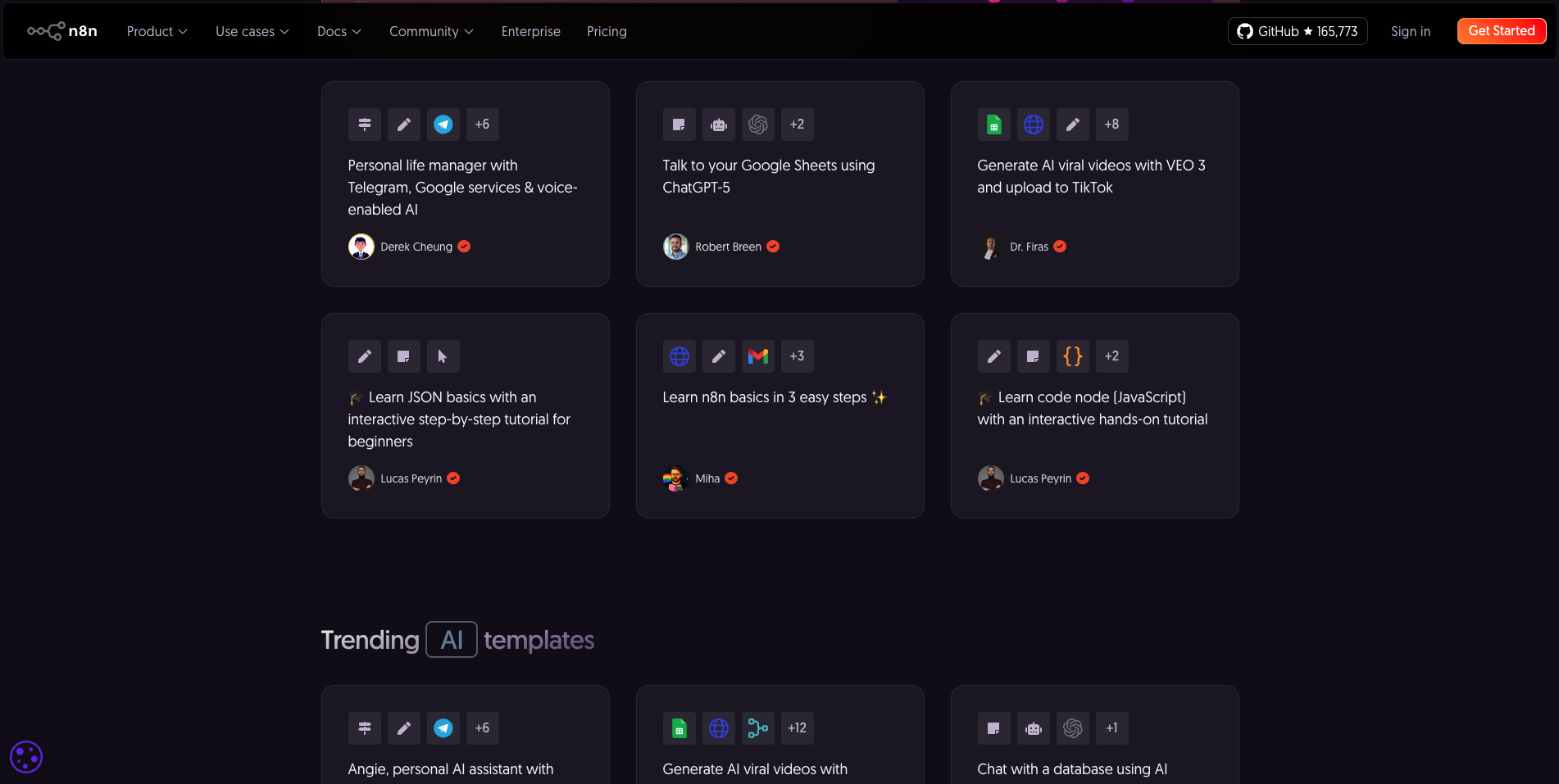
In both cases, the community doesn’t just use the product. It actively markets it.
That’s the shift heading into 2026. The strongest brands won’t be the ones shouting the loudest. They’ll be the ones whose customers do the talking for them.
If there’s one takeaway heading into 2026, it’s this: marketing is no longer a separate layer you add on top of a business. It’s woven into the product, the experience, the people, and the community around it.
The brands that will win aren’t chasing every new channel or obsessing over vanity metrics. They’re building things people actually want, creating content that helps people decide, empowering their teams to be visible, and giving customers something worth sharing.
AI will keep accelerating everything. Content will get cheaper. Tools will get faster. Competition will get louder. And that just makes the fundamentals matter more.
Focus on real voices over polished messages. For startups and small businesses especially, this is good news. You don’t need the biggest budget. You can still achieve great results by focusing on the right things.
2026 isn’t about doing more marketing. It’s about doing it with intent.


.svg)


%20(5).svg)


.png)
